ROLE IN PROJECT:
Product Designer
PROJECT YEAR:
2023
WORK DONE:
Product Strategy / User Flows / Prototyping / Usability Testing
OUTCOME:
50% faster configuration / 90% user comprehension on first use
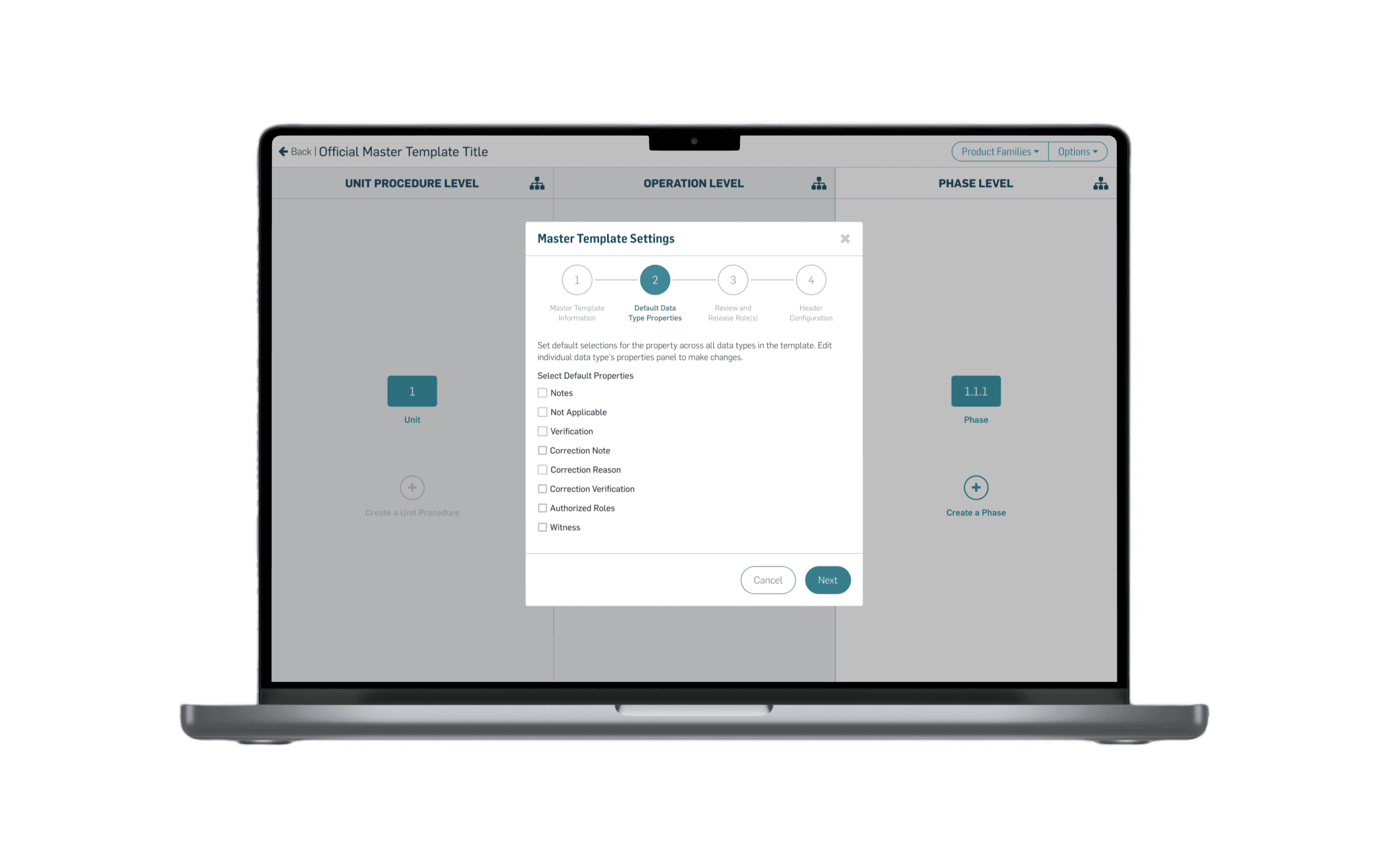
Updating and setting default properties in master templates required a repetitive, multi-step process that was time-consuming and error-prone. In regulated manufacturing environments, this created delays of several days when teams needed to add or update correction reasons—impacting productivity, accuracy, and customer confidence.
If we streamlined the interface to support global property configuration and automatic default settings within master templates, then configuration time could be reduced by at least 50% by eliminating repetitive manual steps and minimizing opportunities for error.
Used Pendo + Datadog to identify the highest-usage properties worth standardizing
Defined the user scenario and mapped where global configuration should live in a complex workflow
Prototyped solutions quickly and validated placement + comprehension through moderated usability testing
Iterated on instructional copy and safeguards (dialogs/notifications) to reduce risk in template-wide changes
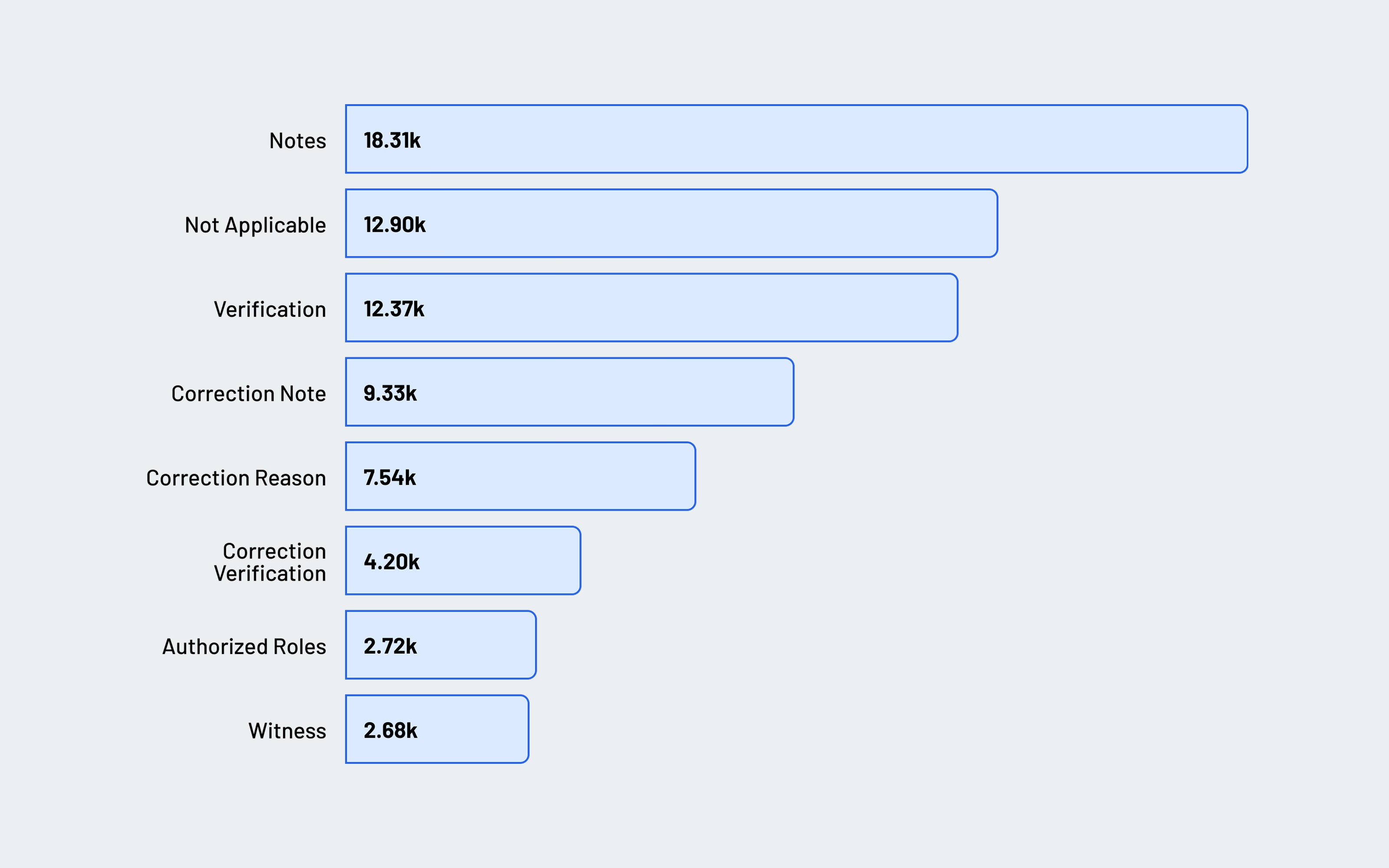
Pendo and Datadog usage data identified which properties builders actually configured. We eliminated the rest to reduce cognitive load — and removed two additional properties that would have cannibalized existing product features.
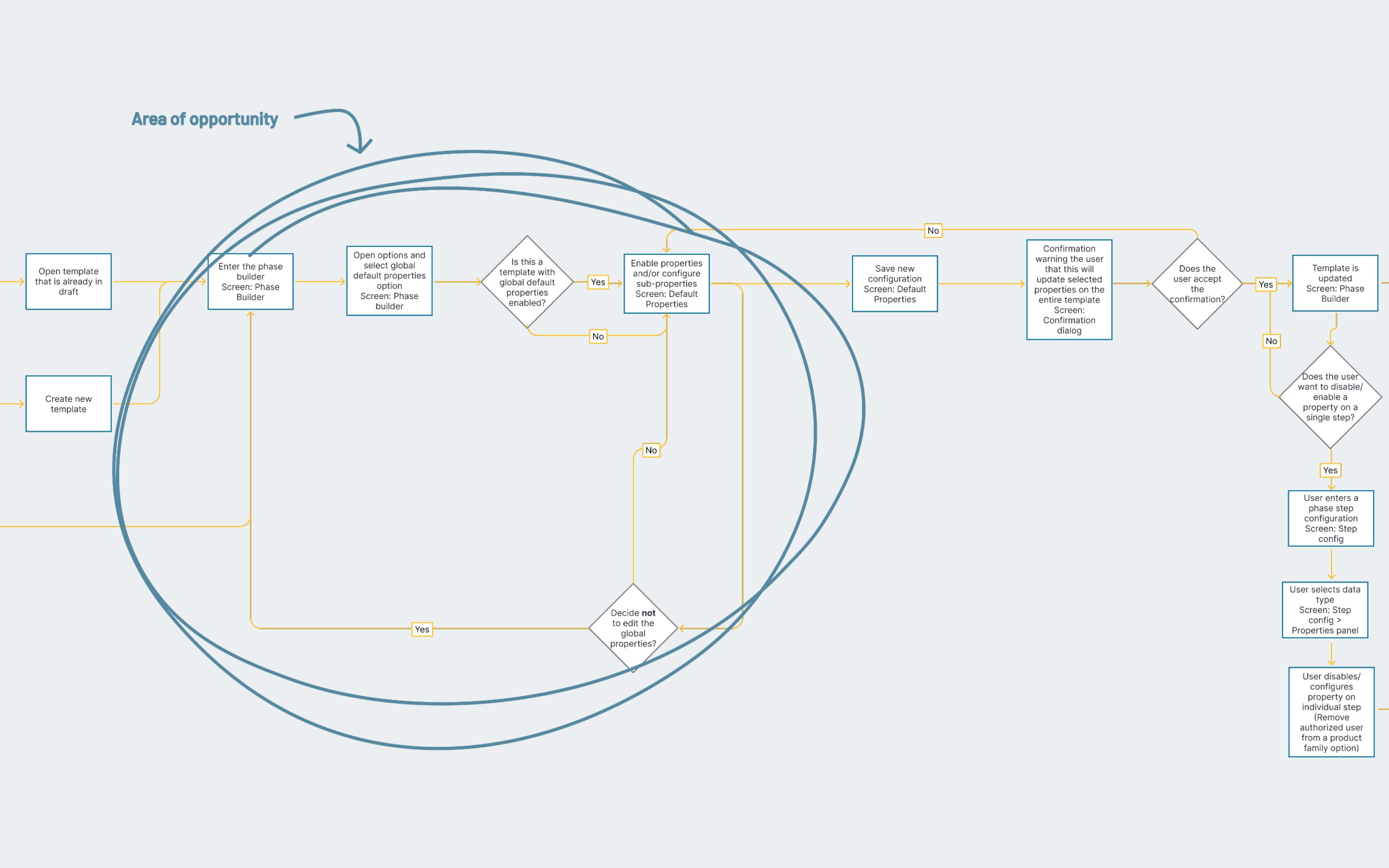
Flow mapping revealed that placing global property configuration early in the journey reduced downstream rework and gave builders template-level control before committing to individual steps.
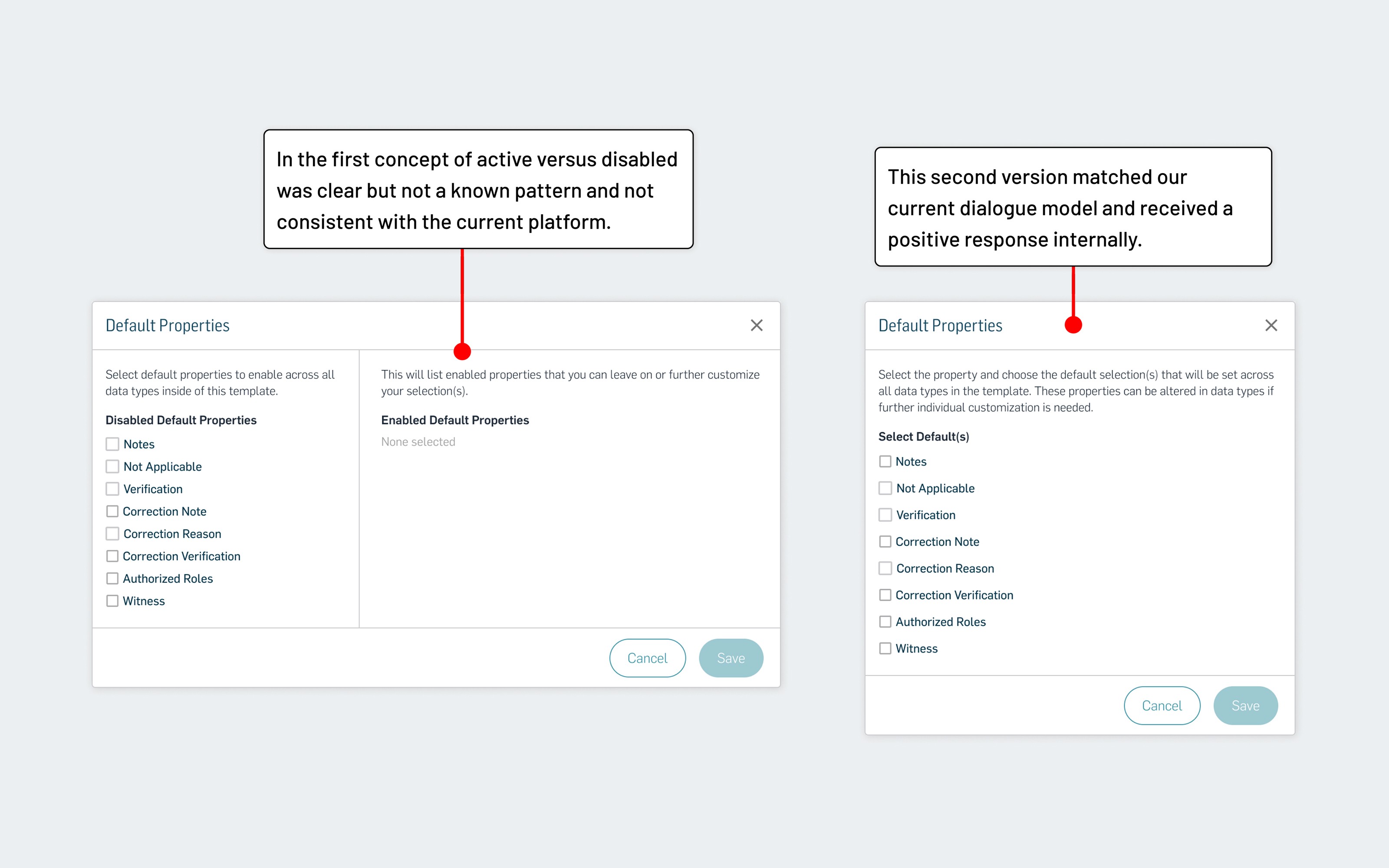
The first concept introduced an active versus disabled pattern that was clear but unfamiliar. The second matched the platform's existing dialogue model and received immediate positive response internally.
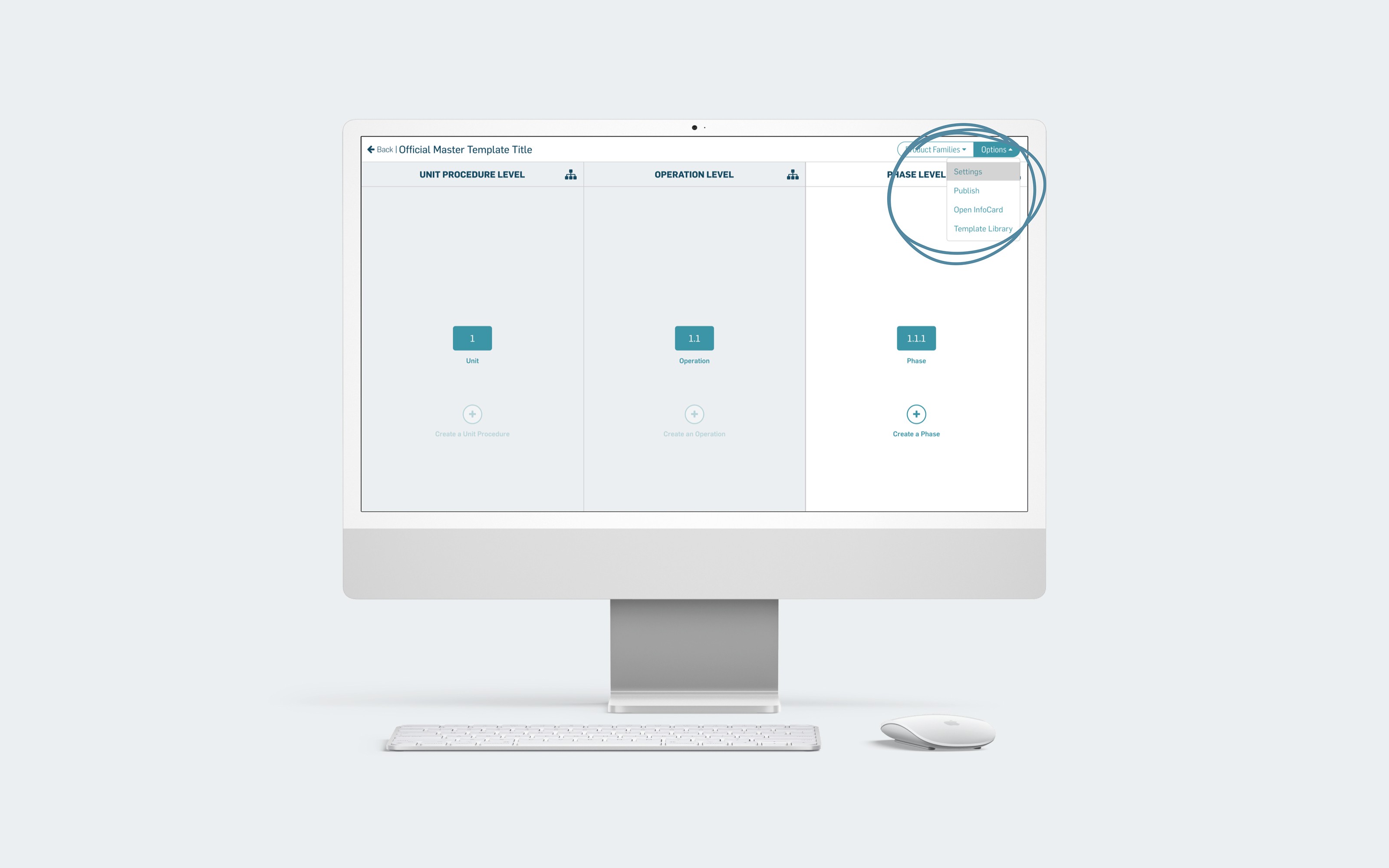
Usability testing confirmed builders wanted control at the template level, not just globally. This validated the core feature placement decision before any code was written.
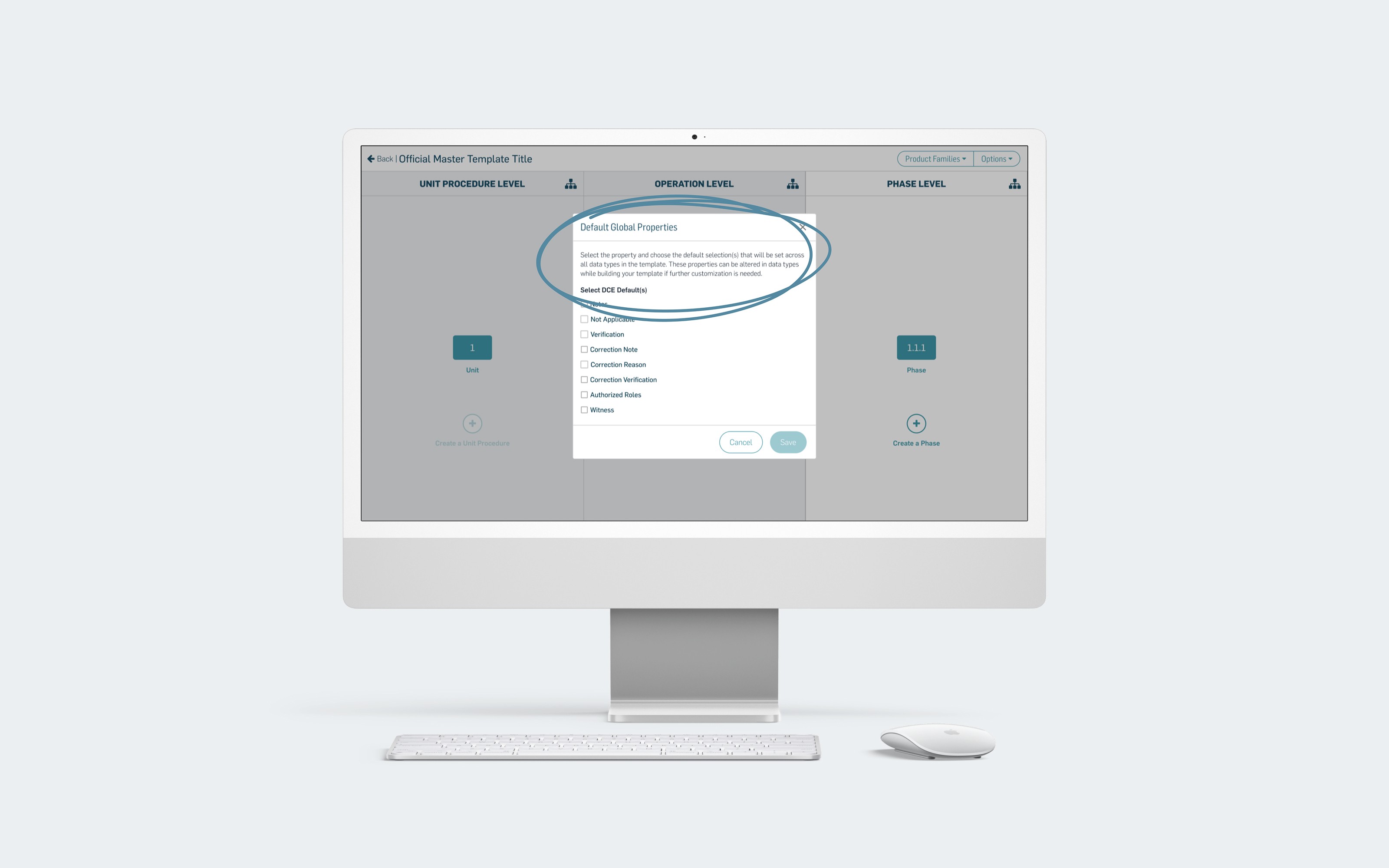
Initial copy created friction at the point of confirmation. Revising the language and hierarchy before development prevented a known usability failure from shipping.
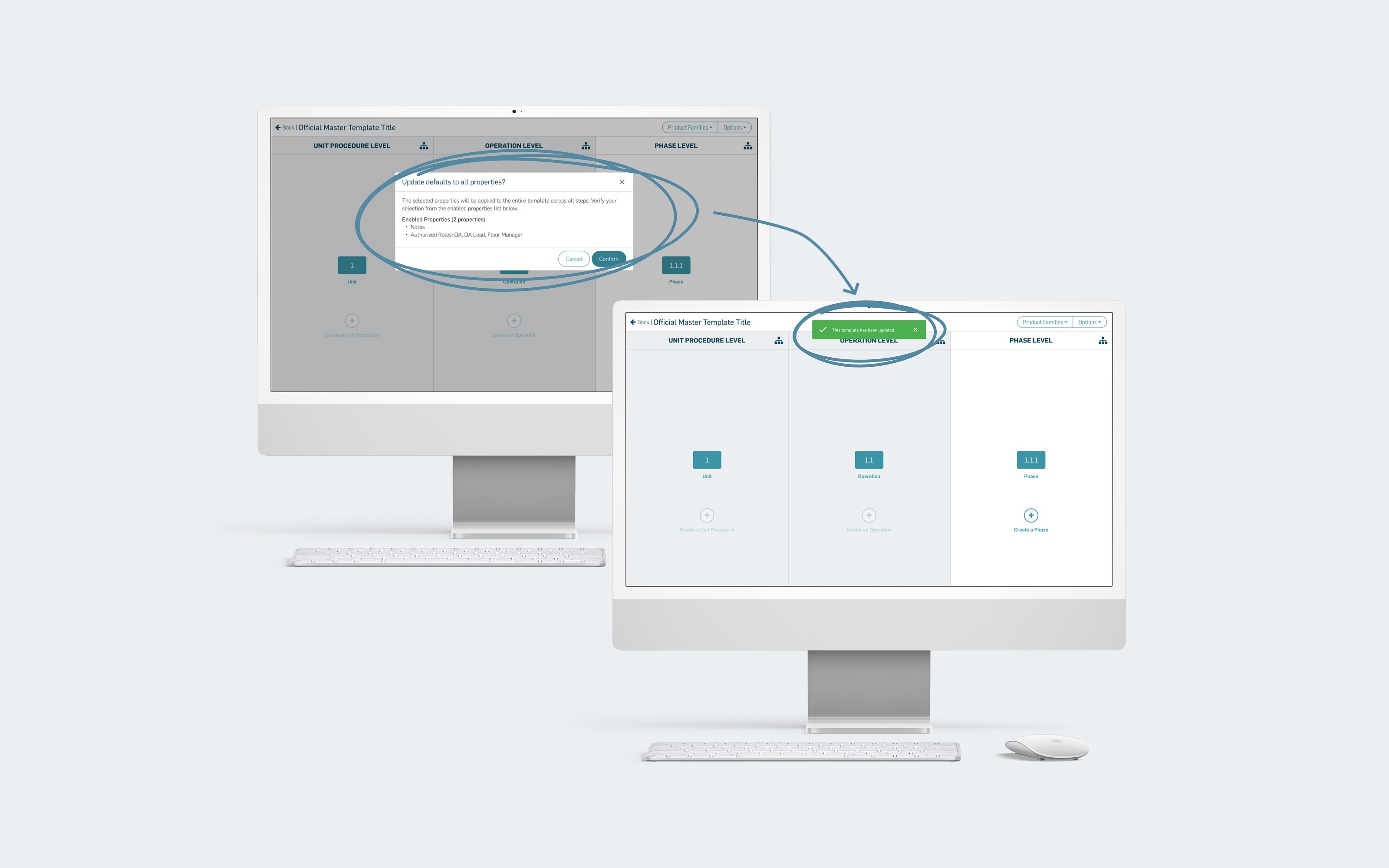
Initial copy created friction at the point of confirmation. Revising the language and hierarchy before development prevented a known usability failure from shipping.
CONFIGURATION TIME REDUCED BY AT LEAST 50%
Streamlining global property configuration into a single template-level step eliminated the repetitive multi-step process that previously caused delays of several days for regulated teams.
USABILITY TESTING PREVENTED A KNOWN FAILURE FROM SHIPPING
Initial instructional copy confused all tested users. Revising it before development meant the confirmation dialog shipped clear and functional, with 90% of users understanding system-wide changes on first use.
FEATURE PLACEMENT REDUCED DOWNSTREAM REWORK
Positioning global properties at the start of the template-building journey gave builders template-level control upfront, eliminating configuration errors that previously propagated through individual steps.